
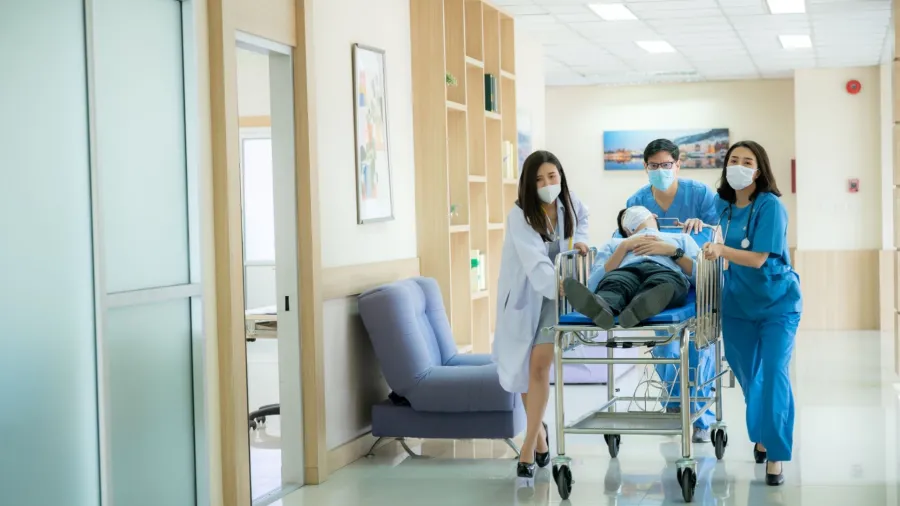
More than 50,000 certified workers have been trained to deliver nursing and personal assistance.
China’s basic medical insurance programme added more than fourm enrollees in 2026 compared with the same period last year, whilst the national participation rate remained at 95%, as reported by Xinhua.
Zhang Chenguang, an official with the National Healthcare Security Administration (NHSA), said the increase was supported by measures to expand access to basic medical insurance.
These include efforts to encourage major cities to remove household registration restrictions for flexible workers seeking insurance coverage where they live or work.
Authorities have also allowed individual medical insurance accounts to be shared across provinces, enabling spouses, children, parents and other close relatives to use each other’s account balances.
China has also expanded its long-term care insurance scheme.
New rules issued in March provide regular personal care and nursing services for insured people who are unable to carry out normal daily activities, with eligible costs reimbursed.
The scheme now covers 320 million people, whilst more than 50,000 certified long-term care workers have been trained, Liu Juan, another NHSA official, said.
Maternity insurance coverage has also been expanded. Twenty provincial-level regions have introduced policies encouraging flexible workers, migrant workers and people in new forms of employment to enrol in maternity insurance alongside employee medical insurance.
Twenty-eight provincial-level regions have also moved to eliminate out-of-pocket payments for inpatient childbirth.
In 2025, maternity insurance benefits were paid 4.81m times, with insured women receiving an average maternity allowance of nearly $4,400, Liu said.
The latest national medical insurance drug list took effect on 1 January. From January to May, medicines newly added to the list were used in 12.25m treatments.
The medical insurance fund paid ($390m) CNY2.64b for the medicines, which generated total drug sales of more than $580m (CNY3.9b).
The NHSA has also launched a nationwide initiative to regulate the prices of medicines and medical consumables.
Wang Xiaoning, another NHSA official, said the prices of 33 types of medical consumables had been reduced to more reasonable levels this year, including defibrillators, heart valves and embolic protection devices.
He cited vagus nerve stimulators as an example, saying prices from three manufacturers had fallen from as much as $39,609.52 (CNY268,000)per unit to $22,465.10 (CNY152,000).
A new round of state-organised bulk procurement of medicines and medical consumables has also been launched, officials said.
($1.00 = CNY6.77)
